- Minab School Tragedy: Iranian Director Becomes Iran’s Voice from Busan Film Festival
- Iran Warns US and Israel Against Further Miscalculations as Tensions Escalate
- Araghchi Warns US and Israel: Previous Attempt to Defeat Iran Only Made Us Stronger
- Russian Foreign Minister Lavrov to Arrive in Tehran Monday
- What’s Lavrov’s Mission in Tehran?
- Behind Closed School Doors: Azerbaijan Govt. Secularism vs. Islamic Identity of Society
- Confiscating Hezbollah’s Explosives Shipment by Govt. a Dangerous Game
- Hormuz, Tehran’s Deterrence Lever against American Threats
- Iraqi PM’s Saudi Visit and Difficult Calculus of Neurality
- Iran Signals Capability to Strike Persian Gulf Internet and AI Infrastructure
Editor's Choice
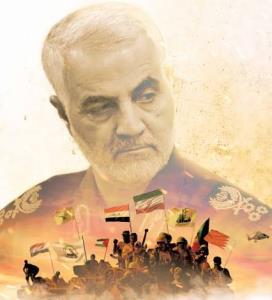
Gen. Solemani, A Living Resistance Legacy General Solemani of Iran caused a transformation to the region that blocked the way of the Israeli and American projects in West Asia.
A Review of Newly Published US National Security Document The US national security document may be an unwanted admission that the US hegemony is diminishing.
US or Venezuela? Who’s the True Oil Thief? Trump says Venezuelan nationalization of its oil was theft of American oil companies’ assets, justifying oil blockade on South American nation.
Why Are Tel Aviv and Washington Stepping Up Pressures against Hezbollah? Israel knows that disarming Hezbollah makes occupation of Lebanon a piece of cake.
Is Yemen on the Verge of Split? The country is sinking in chaos as conflicting forces in the south are going separate ways and Yemenis are less involved in the fate of the south.
News
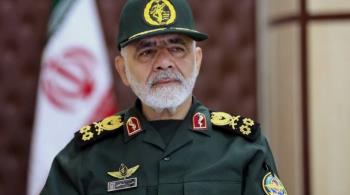
Iran Warns US and Israel Against Further Miscalculations as Tensions Escalate
Iran’s top military commander has delivered a stern warning to the leadership of the United States and the Zionist regimeAraghchi Warns US and Israel: Previous Attempt to Defeat Iran Only Made Us Stronger Iranian Foreign Minister Seyyed Abbas Araghchi cautioned Washington and Tel Aviv against launching another attack on the Islamic Republic
Russian Foreign Minister Lavrov to Arrive in Tehran Monday Iranian Foreign Ministry spokesman Esmaeil Baghaei announced that Russian Foreign Minister Sergey Lavrov is scheduled to visit Tehran on Monday
Iran Signals Capability to Strike Persian Gulf Internet and AI Infrastructure Iran has cautioned that regional data centers and undersea communications cables could become targets if further military action is launched
OIC Foreign Ministers Gather in Baghdad as Araghchi Arrives for Meeting Iranian Foreign Minister Abbas Araghchi arrived in Baghdad on Saturday
IRGC Navy Reports Second Supertanker Explosion Following Naval Mine Strike in Hormuz The IRGC Navy reported that another supertanker burst into flames after hitting a sea mine while attempting to pass through the Strait of Hormuz
Khatibzadeh: Any Agreement Must Include Lebanon Iranian Deputy Foreign Minister Saeed Khatibzadeh said Tehran insists that Lebanon be included in any comprehensive regional agreement
Iran’s U23 Greco-Roman Wrestling Champions Receive Leader’s Congratulations Ayatollah Seyyed Mojtaba Hosseini Khamenei, Leader of the Islamic Revolution, has extended his congratulations to Iran’s Greco-Roman wrestling squad
From Sara to Yair: Will Netanyahu’s Family Become his Election Achilles Heel? Netanyahu’s family is spent by various scandals, each giving the opponents the instruments to wield against him.
YAF Targets Riyadh Airport and Saudi Military Positions The Yemeni Armed Forces launched four ballistic missiles on Wednesday, targeting Riyadh’s King Khalid International Airport
Cargo Vessel Carrying 2,500 Containers Sinks After Hitting Mine South of Strait of Hormuz A container vessel loaded with over 2,500 containers went down south of the Strait of Hormuz after striking a sea mine and subsequently catching fire
Quds Force Chief Reiterates Iran’s Support for Palestine, Calls al-Aqsa Protection a Priority The head of the Islamic Revolution Guards Corps (IRGC) Quds Force has reaffirmed Tehran’s unwavering backing for the Palestinian cause
Iranian Parliament Speaker Says US Must Face Punishment and Meet Tehran’s Legitimate Demands Iranian Parliament Speaker Mohammad Bagher Ghalibaf has called for Washington to be held accountable for its actions against Iran
Iranian, Lebanese Officials Hold Talks on Latest Regional Developments During a meeting in Beirut, Iranian Deputy Foreign Minister Saeed Khatibzadeh and Sheikh Ali al-Khatib exchanged views on recent developments
Iran Warns It Will Sink US Vessels Approaching the Strait of Hormuz IRGC Navy Commander General Ali Ozmaei has cautioned US warships against approaching the Strait of Hormuz, threatening to sink them if they do
Another Oil Tanker Catches Fire in the Strait of Hormuz Iran’s Army Navy said Tuesday that a tanker attempting to pass through the Strait of Hormuz unlawfully caught fire and suffered damage
Yemen Warns Civilians to Leave Saudi Aramco Sites, Threatens Retaliation for Attacks on Sana’a Yemeni Armed Forces has called on civilians and workers to immediately leave areas near Saudi Aramco’s oil installations
IRGC Frees Kidnapped Engineer, Kills Six Terrorists in Southeastern Iran Iran’s Islamic Revolutionary Guard Corps (IRGC) Ground Force has rescued a kidnapped construction engineer and killed six members of a terrorist group
French Protest Turnout Doubles as Demonstrators Call for Macron’s Government to Resign Violent confrontations, detentions, and tear gas erupted in Paris during nationwide demonstrations supported by student groups and trade unions
Iran’s IRGC Navy Reports Another Tanker Incident in Hormuz, Warns US Cooperators The IRGC Navy has warned that it will take firm action against commercial ships and oil tankers operating in the Strait of Hormuz and the Persian Gulf
Most Viewed
Araghchi Warns US and Israel: Previous Attempt to Defeat Iran Only Made Us Stronger
Russian Foreign Minister Lavrov to Arrive in Tehran Monday
Minab School Tragedy: Iranian Director Becomes Iran’s Voice from Busan Film Festival
Behind Closed School Doors: Azerbaijan Govt. Secularism vs. Islamic Identity of Society
What’s Lavrov’s Mission in Tehran?
Iran Warns US and Israel Against Further Miscalculations as Tensions Escalate
French Protest Turnout Doubles as Demonstrators Call for Macron’s Government to Resign
Yemen Warns Civilians to Leave Saudi Aramco Sites, Threatens Retaliation for Attacks on Sana’a
OIC Foreign Ministers Gather in Baghdad as Araghchi Arrives for Meeting
Hormuz, Tehran’s Deterrence Lever against American Threats
Behind Closed School Doors: Azerbaijan Govt. Secularism vs. Islamic Identity of Society
YAF Targets Riyadh Airport and Saudi Military Positions
Iranian Parliament Speaker Says US Must Face Punishment and Meet Tehran’s Legitimate Demands
Khatibzadeh: Any Agreement Must Include Lebanon
IRGC Navy Reports Second Supertanker Explosion Following Naval Mine Strike in Hormuz
Iran: Deployment of 39,000 Troops Thwarted Planned Ground Invasion
White House War Cover-up Suggests Trump is Empty-handed
Ansarullah’s Control of Saudi Airspace Sounds Economic Alarm in Riyadh
Pakistan, Turkey Unreluctant to Directly Join Yemen War, Syria’s Al-Jolani Risks Sending Forces to Death in Yemen: Expert
What Does State of Emergency in Kheyber Pakhtunkhwa Mean?
Pezeshkian Accuses US of Complicity in Israel’s Genocide in Gaza
Iran Has Not Altered Nuclear Policy, Senior Official Says, Leaving NPT Exit on the Table
Iran Holds Strategic Leverage in Strait of Hormuz, Armed Forces Spokesman Says
Al-Houthi: September 21 Uprising Marked a Turning Point in Restoring Yemen’s National Dignity
Leader Vows Knowledge, Morality Will Disarm Aggressors
Trump’s War against the World at UNGA
Araghchi Sets Out 7-Day Hormuz Reopening Plan Tied to US Compliance
Leader’s Adviser Warns of New Front if Iran Faces Another Attack
Sheikh Qassem: Liberation of Occupied Territories Requires Continued Resistance
Ayatollah Seyyed Mojtaba Khamenei Pays Tribute to Nasrallah, Reiterates Iran’s Commitment
Africa: Iran’s Strategic Opportunity to Break the Barriers
Saudi Arabia Launched 988 Airstrikes on Yemen: Military Spokesman
Araghchi Issues Warning to EU, NATO Over US-Israeli Actions
Second Sayyed Nasrallah Anniversary: Display of Loyalty to Resistance Legacy
Minab School Reopens: Alwaght Reports from Bombed Iranian School
Fate of Washington-Erbil Security Pact: The Trump-Kurds Equation
In Focus
Ansarullah
A Zaidi Shiite movement operating in Yemen. It seeks to establish a democratic government in Yemen.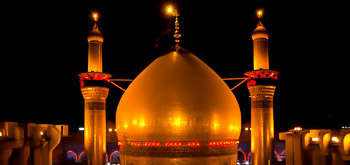
Shiite
represents the second largest denomination of Islam. Shiites believe Ali (peace be upon him) to be prophet"s successor in the Caliphate.
Resistance
Axis of Resistances refers to countries and movements with common political goal, i.e., resisting against Zionist regime, America and other western powers. Iran, Syria, Hezbollah in Lebanon, and Hamas in Palestine are considered as the Axis of Resistance.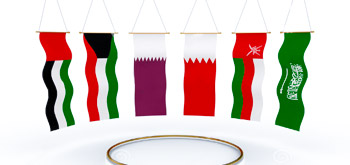
Persian Gulf Cooperation Council
A regional political u n i o n consisting of Arab states of the Persian Gulf, except for Iraq.
Taliban
Taliban is a Sunni fundamentalist movement in Afghanistan. It was founded by Mohammed Omar in 1994.
Wahhabism & Extremism
Wahhabism is an extremist pseudo-Sunni movement, which labels non-Wahhabi Muslims as apostates thus paving the way for their bloodshed.
Kurds
Kurds are an ethnic group in the Middle East, mostly inhabiting a region, which spans adjacent parts of Iran, Iraq, Syria, and Turkey. They are an Iranian people and speak the Kurdish languages, which form a subgroup of the Northwestern Iranian branch of Iranian languages.
NATO
The North Atlantic Treaty Organization is an intergovernmental military alliance based on the North Atlantic Treaty which was signed on 4 April 1949.
Islamic Awakening
Refers to a revival of the Islam throughout the world, that began in 1979 by Iranian Revolution that established an Islamic republic.
Al-Qaeda
A militant Sunni organization founded by Osama bin Laden at some point between 1988 and 1989
New node

Paper
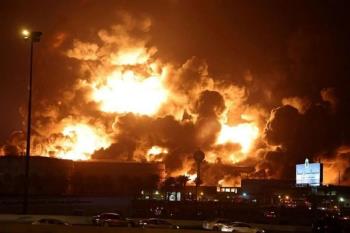
Shadow of Missiles Back on Saudi Oil Empire
Wednesday 29 July 2026
terminals, Red Sea ports, pipeline networks, power plants, international airports and logistics hubs are now all in Sana'a cross hairs. The message is clear: the longer the blockade of Yemen continues, the wider the target list in Riyadh becomes. That is precisely what Mohammed Ali al-Houthi, a ...
Analysis
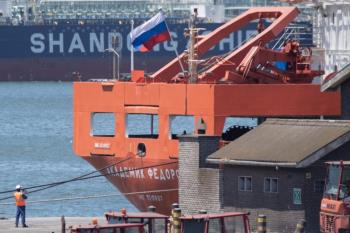
Competition of Corridors Amid Hormuz Crisis: Moscow and Tehran’s Winning Card
Friday 7 August 2026
،
terminals and Europe. In Russian eyes, a successful IMEC would not only undercut the traditional role of the North–South route but also redirect a significant share of Asia–Europe trade through channels beyond Moscow's reach.
In this environment, any fresh bout of instability in the ...
Analysis
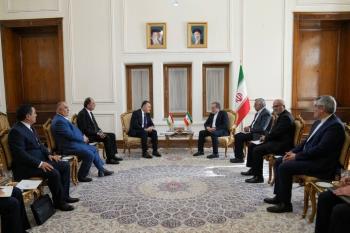
Transit and Energy Cooperation with Neighbors: Iran’s Alternative Way to Circumvent Blockade
Monday 17 August 2026
،
terminals on the Indian Ocean, bound for China and other East Asian markets. Such a corridor would reduce Iran's dependence on the Strait of Hormuz while keeping its most important crude customers within reach.
That calculus grows more compelling given the serious maritime constraints Iran' ...
Report
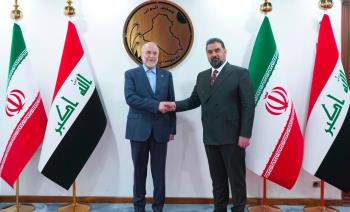
Iran’s Ghalibaf in Baghdad: Common Cases on the Table
Friday 21 August 2026
،
terminals, remain heavily dependent on the Persian Gulf shipping lane and the strategic strait.
With regional military developments casting a shadow over shipping safety in the strait, Baghdad is hunting for mechanisms to keep its oil flowing. That makes coordination with Tehran all the more critic ...
Analysis
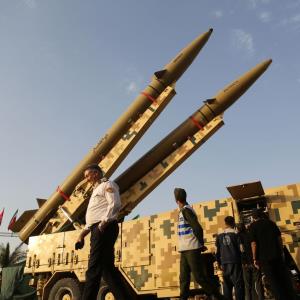
Iran’s Weapons Arsenal Redefining Deterrence Power
Sunday 23 August 2026
،
terminal-phase maneuverability, making interception harder even for advanced systems like the Patriot.
The American officials told The Wall Street Journal that the frequency of attacks and resulting casualties suggest Iranian forces still hold large missile reserves and have grown more adept at eva ...
Analysis
Failed Witkoff-Kushner Mission: Ukraine War in Diplomatic Standoff
Wednesday 9 September 2026
،
LNG, the Ukrainian president said that we specifically raised the issue with Jared and Steve, as well as with our European partners. Air defense, energy support, and as we know we seriously count on using the US LNG.
Many Ukrainians are bracing for the war to drag into a fifth year, dreading the wi ...

Analysis
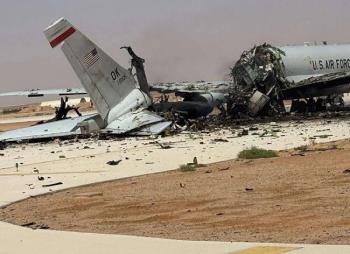
Mokha Capture: A Red Sea Balance Shifter
Saturday 12 September 2026
،
terminal on the Red Sea coast at a time when traffic through the Strait of Hormuz has been disrupted. Reuters has warned that expanding Ansarallah's influence in Bab al-Mandab could also affect the route for transferring Saudi oil to Asian markets. This effectively creates a new vulnerability fo ...
Report
12 American Bases and Facilities Iranian Missiles Damaged
Monday 21 September 2026
،
terminals.
The Associated Press, citing satellite imagery in a March 17 report, also described the destruction of a large building and damage to several radomes at the base.
The Washington Post, in a review published May 6, reported that the Fifth Fleet headquarters, along with three US mili ...
Report
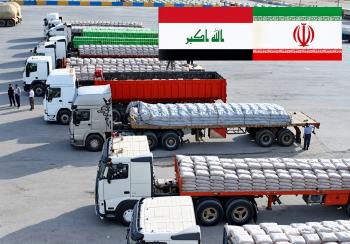
Shalamcheh and Chazabeh Crossings: How’s Border Closure Impacting Iran-Iraq Trade?
Tuesday 22 September 2026
،
terminals and crossings as key pillars of regional security and international trade play a growing role in the Iranian economic bonds with neighboring states. Therefore, any disruption of these trade arteries can fast impact foreign trade, something showing itself on the Iranian-Iraqi borders these ...

News
YAF Launch Four Major Operations Targeting Saudi Airports, Aramco Facilities
Sunday 11 October 2026
،
Yemen’s armed forces say they have targeted key Saudi infrastructure and military positions ALWAGHT- Yemen’s armed forces say they have targeted key Saudi infrastructure and military positions, warning that retaliatory operations will continue until Riyadh halts its attacks and lifts the block ...